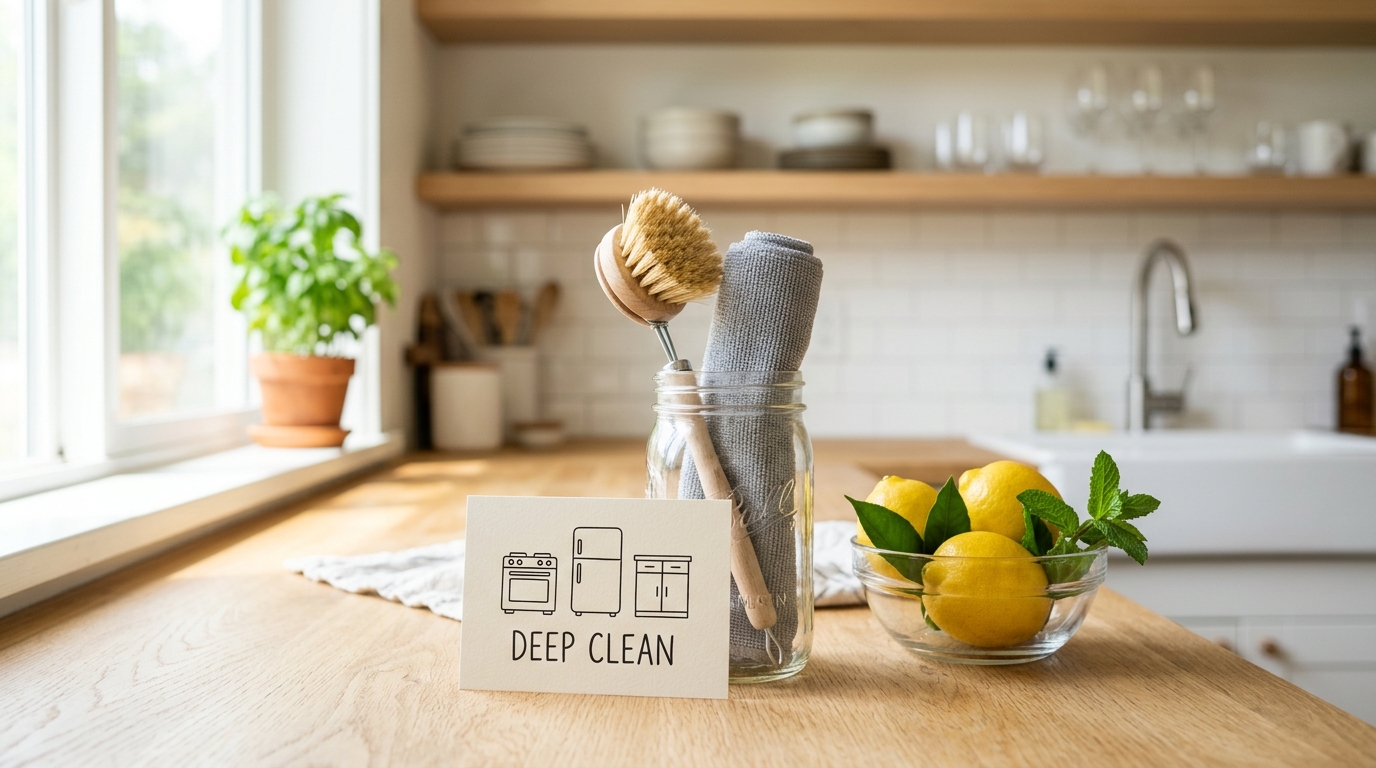
Quick Answer: A reasonable baseline is every 3 to 6 months for a full kitchen deep clean — appliance interiors, cabinet fronts, backsplash detail — with regular lighter cleaning handling day-to-day mess in between. Heavy home cooks and larger households should lean toward the more frequent end of that range.
The kitchen sees more daily use than any other room in the home, which means it needs deeper attention more often than most other spaces — but “how often” still depends on specifics about how your household actually uses the space.
The Baseline: Every 3 to 6 Months
For most households, a full kitchen deep clean — addressing appliance interiors, cabinet fronts, backsplash detail, and behind/under what’s safely movable — every 3 to 6 months keeps pace with normal buildup, supplementing regular lighter cleaning (whether professional or DIY) that handles day-to-day surface mess in between.
What Pushes Toward More Frequent Deep Cleaning
Frequent cooking, especially anything involving significant oil use, generates faster grease buildup on cabinet fronts, backsplash, and range hood surfaces than in lower-cooking-frequency households.
Larger households generate proportionally more daily kitchen use — more meals, more dishes, more general traffic through the space.
Pets in the kitchen area add an additional layer of mess (tracked-in dirt, fur, occasional spills) beyond typical cooking-related buildup.
Visible grease buildup on cabinet fronts near the stove is a reliable, concrete signal that a deep clean is due sooner rather than later, regardless of how much time has technically passed since the last one.
What Pushes Toward Less Frequent Deep Cleaning
Lower-use kitchens — smaller households, or households that eat out or order in frequently rather than cooking daily — generate buildup more slowly and can often extend the interval between deep cleans.
A kitchen already on a consistent standard-cleaning schedule that handles surface upkeep weekly or biweekly needs less aggressive periodic deep cleaning than a kitchen with no regular maintenance at all, since routine visits are already addressing a meaningful share of ongoing buildup.
Signs Your Kitchen Is Overdue
A few concrete, visible signals that a deep clean is due, regardless of the calendar: a grease film on cabinet fronts near the stove that a regular wipe-down doesn’t remove, a persistent buildup smell inside the microwave or oven, grime accumulating in backsplash grout lines, or appliance exteriors that look dull or filmy despite regular surface cleaning. If you’re noticing any of these, it’s a reasonable signal to book sooner rather than waiting for a fixed interval to pass.
Individual Kitchen Tasks and Their Own Timelines
Not every kitchen deep-clean task needs to happen on the same schedule. Inside-oven cleaning is often best timed before heavy-use periods like the holidays — see our Oven Cleaning page. Refrigerator interior cleaning benefits from a seasonal rhythm, addressed in our Refrigerator Cleaning page. Cabinet cleaning, particularly for fronts near the stove, may warrant more frequent attention than cabinets in lower-grease areas — see our Cabinet Cleaning page for the full breakdown.
Kitchen Deep Cleaning as Part of a Broader Plan
If you’re already on a Recurring Cleaning plan with standard visits handling weekly or biweekly upkeep, a periodic kitchen-specific deep clean (or a full-home Deep Cleaning) fills the gap for buildup that routine visits don’t fully address. Many recurring clients pair an annual or biannual kitchen deep clean with their existing standard schedule rather than treating it as an entirely separate, disconnected service.
Balancing Kitchen Deep Cleaning With Your Overall Schedule
If your household already books regular full-home deep cleans a couple of times a year, a separate standalone kitchen deep clean may not be necessary in between — the two can serve the same purpose depending on how your existing schedule is structured. Ask us directly if you’re unsure whether your current plan already covers this.